 Sales & Support
Every year, a familiar question comes up among NRI families weighing where to put down roots back home: which Indian city offers a genuinely liveable, well-connected residence without the congestion and pricing pressure of a metro core. For a growing number of NRI buyers, that question is increasingly being answered with Zirakpur, and more specifically, with KS ONE-O-8. This guide examines why NRI investment in Zirakpur has picked up pace, what the 3, 4 and 5 BHK configurations at KS ONE-O-8 actually offer NRI families, and what should be verified before committing capital from abroad. No claim here should be read as a guaranteed return.
Table of Contents
- 01Why NRIs Are Looking at Zirakpur
- 02The Buying Case for KS ONE-O-8 Among NRI Families
- 033, 4 & 5 BHK Homes: Matching Configuration to Family Need
- 04Location, Open Greens and Amenities as Return Drivers
- 05What Differentiates KS ONE-O-8 for NRI Buyers
- 06Rental Demand and Yield Potential When Managing From Abroad
- 07What Could Support Capital Appreciation
- 08Comparing KS ONE-O-8 With Other Options in the Market
- 09NRI-Specific Considerations: Financing, Repatriation and Taxation
- 10Risks NRI Buyers Should Weigh Before Committing
- 11Matching KS ONE-O-8 to Your NRI Investment Plans
- 12Your Pre-Purchase Checklist, Category by Category
- 13Frequently Asked Questions
- 14Disclaimer
Why NRIs Are Looking at Zirakpur
Zirakpur has moved well past being a secondary alternative to Chandigarh and Mohali. For NRI families in particular, it has become a serious contender for a home base in India, for reasons that go beyond price alone:
- Proximity to Chandigarh International Airport, which shortens the door-to-door travel time on visits home
- Direct National Highway connectivity linking Chandigarh, Mohali and Panchkula, useful for family members who still commute or travel regionally
- A meaningfully lower entry price than core Chandigarh or Mohali, for a comparable or larger residence
- A growing base of managed, professionally maintained residential communities, which matters to NRIs who cannot personally oversee upkeep
- Established schools, hospitals and retail infrastructure, relevant both for family members living there year-round and for NRIs planning an eventual return
For NRI buyers, the calculus is often different from a purely domestic investor’s. The property needs to work as a family home during visits, a reliable asset when unoccupied for long stretches, and a residence that can be managed largely at a distance. This shapes which projects actually make sense, and it is exactly where a development like KS ONE-O-8 has drawn attention.
The Buying Case for KS ONE-O-8 Among NRI Families
NRI buyers are rarely drawn to a single feature. The case for KS ONE-O-8 rests on how several factors reinforce each other for a buyer who may be managing the purchase, and later the property, from another country:
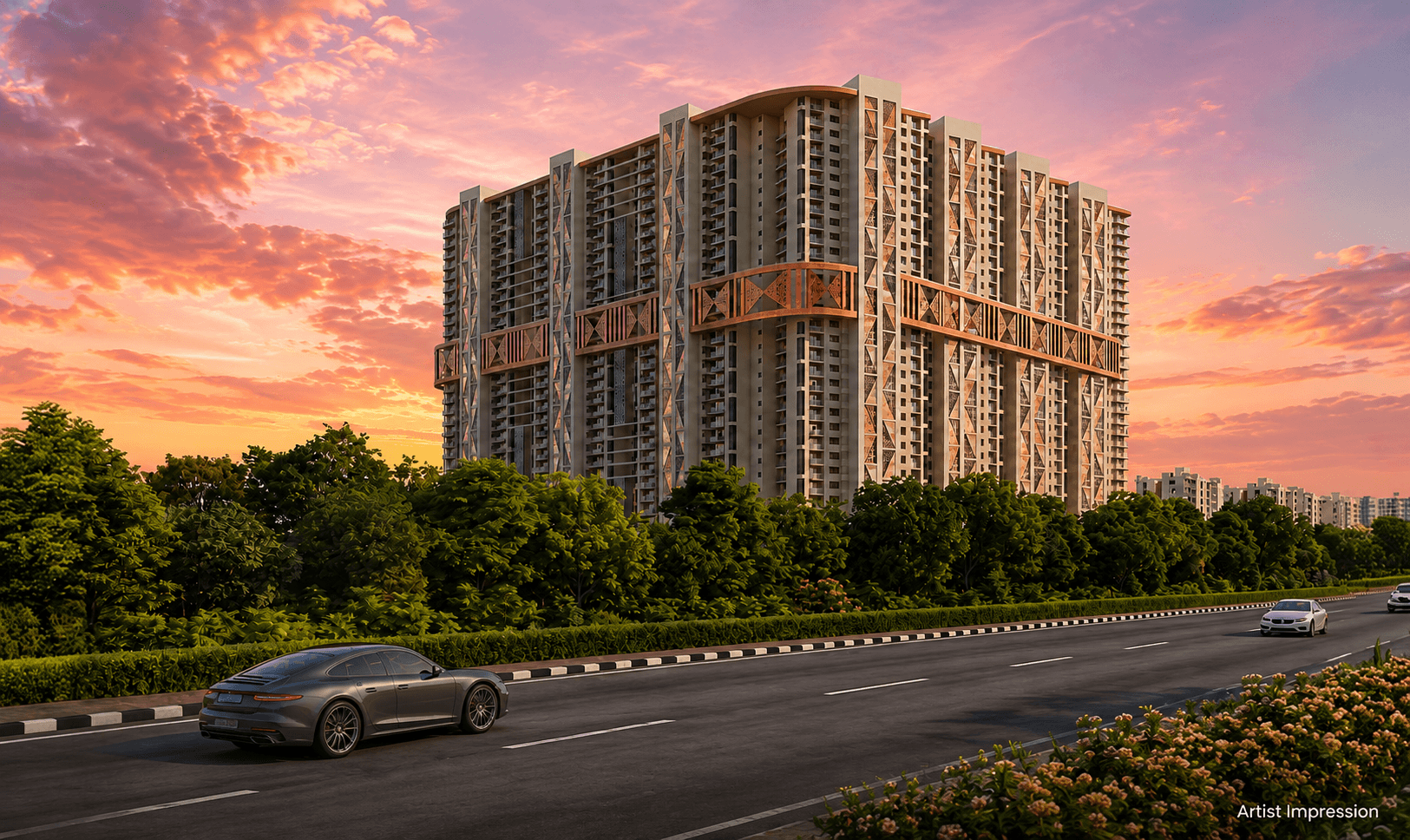
- A 108-metre high-rise identity that stands apart from standard apartment stock in the corridor
- Expansive 3, 4 and 5 BHK residences designed for genuine family living, including multigenerational households
- Direct National Highway connectivity linking Chandigarh, Mohali, Panchkula and the airport corridor
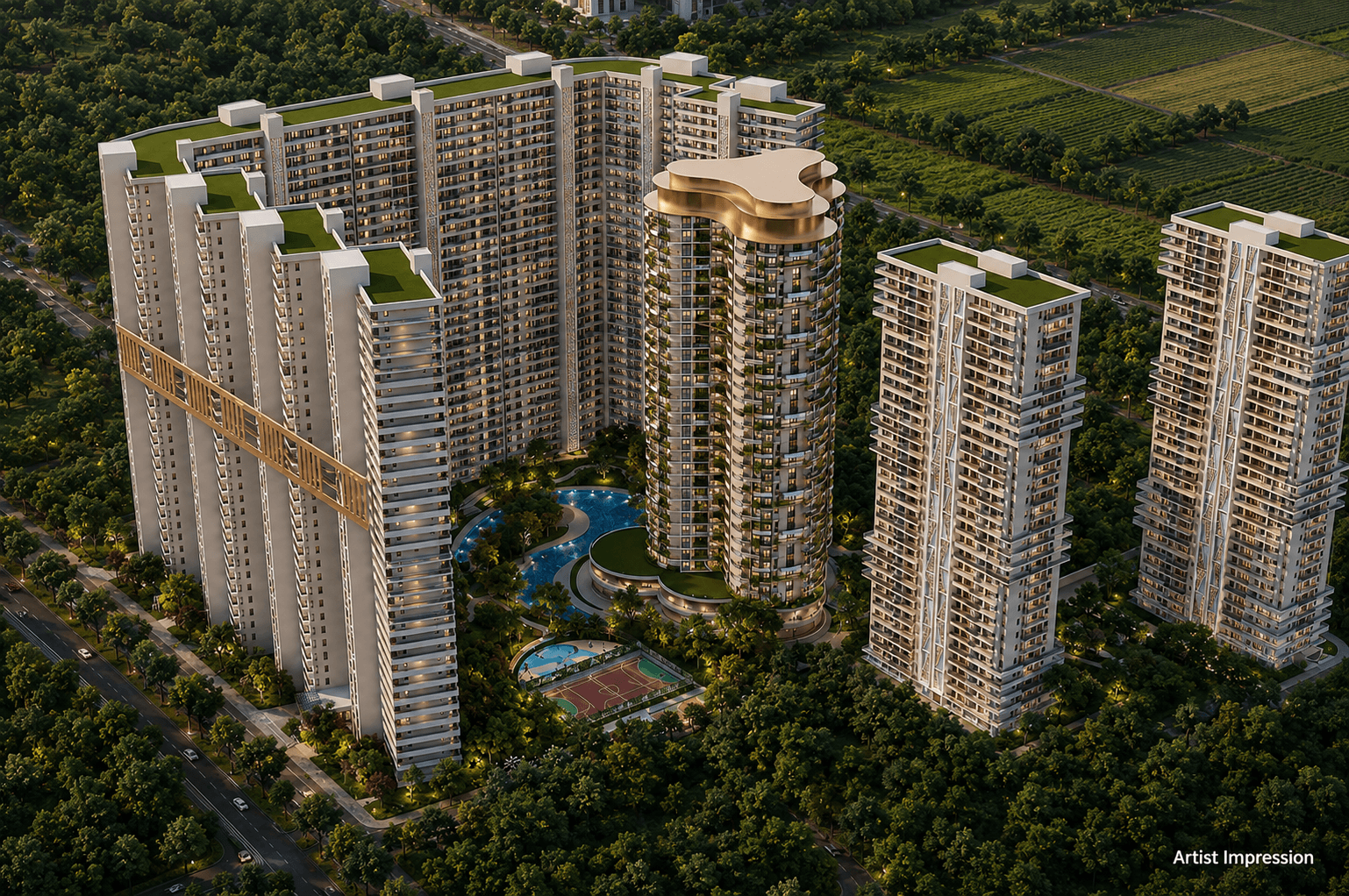
- More than 80% open greens, a ratio that becomes progressively harder to replicate as the surrounding area densifies
- Over 40 wellness, recreation and community amenities, relevant to family members who may live there full time even when the NRI owner does not
- RERA- registered status and transparent project documentation, which matters considerably more when the buyer cannot inspect every stage of construction in person
- The backing of KS Group, a developer with delivered projects, including FIO Homes, FIO Home II and Ashirwad Towers, already standing and occupied in the region
For an NRI buyer, developer credibility carries extra weight, since the ability to visit the site regularly during construction is limited. A visible, inspectable track record of completed projects gives a distance buyer something more concrete to evaluate than launch material and video walkthroughs alone.
3, 4 & 5 BHK Homes: Matching Configuration to Family Need
Not every NRI family needs the same configuration, and the right choice depends on how the home will actually be used.
- 3 BHK homes tend to suit smaller NRI families, or those primarily using the residence during periodic visits, while still offering enough space for guests or aging parents to stay comfortably. These 3 BHK flats in Zirakpur are often the starting point for NRI families weighing their first India-based residence.
- 4 BHK homes work well for families planning a more permanent return to India, or those who want a dedicated home office, a guest room, and space for children who may eventually study or settle nearby.
- 5 BHK homes are generally chosen by multigenerational families, or NRI buyers consolidating extended families under one roof, where privacy between generations and separate living zones matter as much as overall size.
Across all three configurations, the same underlying questions matter: carpet area versus advertised area, room proportions and natural light, cross-ventilation, privacy between bedrooms, kitchen functionality, and how many residences share each floor. A larger configuration is only a genuine upgrade if the extra space is well planned rather than simply added on paper.
Location, Open Greens and Amenities as Return Drivers
Connectivity. For NRI buyers, connectivity is not just a convenience feature, it directly affects how usable the property remains between visits and how easily it can be rented or resold. KS ONE-O-8’s direct National Highway access places it within practical reach of Chandigarh, Mohali, Panchkula, Chandigarh International Airport, established schools and hospitals. This matters twice over for NRI families: it shortens the journey home during visits, and it widens the pool of potential tenants or resale buyers if the property is ever let out or sold.
Open greens. New construction can add more apartments to a market. It cannot easily add more open land. As Zirakpur continues to densify, developments with meaningful landscaped space become progressively harder to replicate. KS ONE-O-8’s more than 80% open greens is a scarcity advantage worth verifying directly, including how the percentage is calculated and whether it is protected through to project completion.
Amenities. Over 40 amenities matter to NRI families specifically because resident family members, rather than the owner, are often the ones using them day to day. It is worth confirming who will operate the facilities, what monthly maintenance will include, and whether a long-term repair and replacement fund is planned, since an NRI owner is less able to respond quickly to maintenance shortfalls than a resident owner would be.
What Differentiates KS ONE-O-8 for NRI Buyers
- A distinct high-rise identity. A recognisable project is easier to reference, describe and verify remotely than an anonymous apartment block, which matters when much of the buying process happens over calls and video walkthroughs.
- Larger residential formats. 3, 4 and 5 BHK options let NRI families choose a configuration matched to whether the home is a periodic base, a future return residence, or a multigenerational household.
- More than 80% open greens. A genuine differentiator for families who may spend limited time in India each year and want that time to feel spacious and calm rather than dense and congested.
- Over 40 amenities. Relevant to resident family members using the property full time, with value depending on delivery and upkeep rather than the count alone.
- A developer with completed regional projects. Gives a distance buyer verifiable, inspectable evidence of execution quality, rather than requiring blind trust in an ongoing project alone.
Rental Demand and Yield Potential When Managing From Abroad
Verifying real rental demand through market data and local insight is a smart first step before relying on projected income, and this becomes especially valuable for NRI owners who count on rental income to help cover holding costs. A clear, well-researched view of rental demand helps set realistic expectations and puts NRI owners in a stronger position from day one.
Gross rental yield formula: Annual Rental Income divided by Total Acquisition Cost, multiplied by 100. Total acquisition cost should include the base apartment price, floor or preferential location charges, parking, club or amenity charges, applicable GST, stamp duty and registration, brokerage where relevant, furnishing, initial maintenance deposits, and interest paid before possession.
For NRI owners specifically, it is worth also factoring in the practical cost of remote property management, whether that means a professional facility manager, a local family member, or a property management service, since none of these are free and all affect the real net yield. Because KS ONE-O-8 is under construction, any rental projection is necessarily an estimate. NRI buyers should model conservative, expected and strong-market rental scenarios, and proceed only if the purchase remains sound under the conservative case, particularly since managing a shortfall from abroad is considerably harder than managing one locally.
What Could Support Capital Appreciation
No developer, broker or advisor can responsibly guarantee future appreciation. Property values are influenced by interest rates, local supply, infrastructure delivery, construction progress, economic conditions and buyer sentiment. Certain characteristics, however, tend to improve the probability of sustained demand:
- Developer credibility. A completed and well-maintained project is easier to trust, finance, rent and resell, even from a distance.
- A distinct product identity. A recognisable high-rise with larger residences and substantial open space may face less direct competition than standard apartment inventory.
- Reliable connectivity. To employment, healthcare, education, retail and the airport, which expands the potential buyer and tenant pool.
- Genuine end-user utility. Functional layouts and a comfortable daily environment support demand from resident families, not only from investors.
- Limited replicability. Land, openness, scale and location can be difficult for future developments to reproduce at the same footprint.
KS ONE-O-8 brings several of these attributes together. That creates a buying case, not a return guarantee, and this distinction matters as much for NRI buyers as for anyone else.
Comparing KS ONE-O-8 With Other Options in the Market
A meaningful comparison applies the same criteria to every shortlisted development rather than comparing only price per square foot, which can conceal weaker construction, poor access, higher density or less usable space.
| Evaluation Factor | What to Examine | KS ONE-O-8 |
|---|---|---|
| Developer | Delivered projects, execution history, resident feedback | Developed by KS Group, with completed projects including FIO Homes, FIO Home II and Ashirwad Towers already standing in the region |
| Configuration | Available sizes and layouts | 3, 4 and 5 BHK homes designed for family living |
| Project identity | Architecture, scale, market recall | 108-metre high-rise positioning |
| Open space | Ratio, usability, landscaping | More than 80% open greens |
| Amenities | Relevance, delivery, maintenance | Over 40 amenities |
| Connectivity | Highway and airport access | Direct National Highway connectivity, close to Chandigarh International Airport |
| Regulatory status | RERA registration and disclosures | RERA-Registered |
| Remote management support | Facility management, transparency for distance buyers | Must be verified directly with the developer |
| Holding cost | Financing, maintenance and acquisition expenses | Must be calculated from the current cost sheet |
| Exit market | Future buyers, tenant profile, competing supply | Requires project-specific market comparison |
A higher price is justified only when the underlying project delivers proportionately stronger long-term value across these criteria, not simply a longer feature list.
NRI-Specific Considerations: Financing, Repatriation and Taxation
Buying property in India as an NRI involves a distinct set of procedural and regulatory steps beyond what a resident buyer navigates:
- Payment routing: Payment for the property must be made through permitted banking channels. NRI/OCI buyers may use inward remittances from abroad or eligible funds held in NRE, NRO, or FCNR(B) accounts. Buyers should confirm the appropriate payment route with their bank before completing the transaction.
- Power of attorney. Many NRI buyers rely on a power of attorney to a trusted family member or representative in India to handle site visits, document signing and follow-up, which should be drafted carefully and specifically for the transaction.
- Repatriation rules. Rules governing how sale proceeds can later be repatriated abroad are specific and should be understood before purchase, not after a future sale.
- Taxation. NRI buyers should understand applicable TDS on any future sale, capital gains treatment, and any double taxation avoidance agreement between India and their country of residence.
- Home loan eligibility. Several Indian banks offer NRI-specific home loan products, though eligibility, documentation and interest rates can differ from resident loans and are worth comparing across lenders.
- Remote documentation. Confirming which documents can be signed and notarised abroad, and which require physical presence in India, helps avoid last-minute delays during registration.
None of this should be treated as legal or tax advice. It is a starting checklist, and NRI buyers should work with a qualified chartered accountant and property lawyer familiar with NRI transactions before finalising a purchase.
Risks NRI Buyers Should Weigh Before Committing
- Construction and completion risk. Every under-construction project carries timing and execution risk, harder to monitor closely from abroad, so it should be checked against the registered RERA schedule and current site progress through regular updates or a trusted local representative.
- Remote management risk. A property that is difficult to maintain or rent out without the owner’s physical presence can become a burden rather than an asset if management arrangements are not planned in advance.
- Currency and interest rate risk. Exchange rate movements affect the real cost of a purchase funded from abroad, and interest rate changes affect financing costs on either side.
- Documentation risk. Errors or gaps in power of attorney, NRE/NRO routing or title verification can be considerably harder to correct remotely than they would be for a resident buyer.
- Liquidity risk. Residential property is not a liquid asset, and selling can take time, particularly from a distance and during weaker market conditions.
- Tenant risk. Rental income can be affected by vacancy, tenant turnover and competing completed inventory nearby, and issues are harder to resolve quickly without a local presence.
These risks do not rule out the purchase. They determine how much additional planning, professional support and margin of safety an NRI buyer should build in before committing.
Matching KS ONE-O-8 to Your NRI Investment Plans
A strong fit for:
- NRI families planning periodic visits who want a spacious, well-maintained base near the airport
- NRI buyers planning an eventual return to India who want a larger 4 or 5 BHK home ready in advance
- Multigenerational NRI families consolidating extended family into one well-planned residence
- NRI buyers who can arrange reliable local representation or professional property management
- NRI buyers comfortable holding through construction and initial community stabilisation before the property is fully usable
Best planned for by NRI buyers who can also arrange:
- A holding period that allows the community to stabilise, rather than expecting rental income from day one
- A trusted local representative or professional management partner to oversee the property
- Comfort with the natural currency and financing considerations that come with an overseas purchase
- A complete budget that includes remote management costs alongside registration and maintenance
- An in-person visit or a representative-led site visit paired with full document review
A well-positioned property still depends on the right match with how the home will actually be used, who will manage it locally, and the buyer’s comfort with construction-stage and remote-management planning. Taking the time to align these upfront helps ensure the investment works well for the long run.
Your Pre-Purchase Checklist, Category by Category
- Documentation and Legal Standing
Before anything else, confirm the RERA registration is in place and check the registered possession timeline. Look at the approved building plans, verify land title and ownership, review the sale agreement clause by clause, and understand what happens if you need to cancel or seek a refund.
- Understanding the Full Cost
Ask for a complete cost sheet rather than a headline price. Clarify carpet versus saleable area, all applicable taxes, and charges for parking, club and amenities. Factor in the maintenance deposit and recurring maintenance, any interest accruing on a home loan during construction, and a realistic furnishing budget.
- Construction and Build Quality
Check current construction progress against committed milestones. Review lift and power backup specifications, fire and emergency safety planning, and the material and finish specifications. Confirm the payment schedule is tied to actual construction progress, not just time elapsed.
- Reading the Market and the Developer’s History
Look at recent sale transactions nearby and rents being achieved by comparable completed projects. Factor in supply expected to come online around your possession date, and build a conservative rental yield estimate rather than an optimistic one. Where possible, visit KS Group’s delivered projects, FIO Homes, FIO Home II and Ashirwad Towers, and speak with residents about their experience and how well the property has been maintained.
- Festive Offers, If Applicable
Any discount, waiver or payment flexibility should be documented in writing, not just promised verbally. Also check the offer’s validity window and what happens if your documentation takes longer to complete.
Disclaimer
Property values and rental income may rise or fall. This article does not constitute a guaranteed return promise or personalised financial, legal, tax or investment advice. NRI buyers should independently verify project documents, RERA registration, market information, taxation, repatriation rules and financing implications directly with KS Group, a qualified property lawyer, and a chartered accountant before making any purchase or investment decision.
FAQ
NRIs are drawn to the combination of a 108-metre high-rise identity, spacious 3 BHK flats in Zirakpur, 4 BHK and 5 BHK configurations, direct National Highway and airport connectivity, more than 80% open greens, over 40 amenities, RERA-registered status and KS Group’s existing delivery record in the region, rather than any single feature in isolation.
Yes, through a properly drafted power of attorney to a trusted representative, along with remote NRE/NRO account setup and documentation that can be notarised abroad. Certain steps, particularly final registration, may still require physical presence or a representative acting under the power of attorney, so this should be confirmed with a property lawyer in advance.
A 3 BHK suits smaller families for periodic use, a 4 BHK suits families planning a more permanent return or wanting dedicated extra space, and a 5 BHK generally suits multigenerational families consolidating extended household members under one roof. The right choice depends on how the home will actually be used, not on size alone.
No responsible developer or advisor can guarantee future returns. The project brings together several factors that may support long-term demand, but final outcomes depend on acquisition price, construction execution, holding period and prevailing market conditions.
A reliable figure cannot be stated before possession and market stabilisation. NRI buyers should examine recent rents from comparable occupied developments, include the complete acquisition and remote-management cost, and model conservative, expected and strong-market scenarios.
KS ONE-O-8 is a RERA-registered residential development. NRI buyers should independently verify the project registration number, approved disclosures and registered completion timeline before booking.
NRI buyers should review RERA records, title documents, total acquisition cost, payment milestones, power of attorney requirements, applicable TDS and capital gains treatment, repatriation rules, and the practical process for managing or renting the residence after possession, ideally with a qualified chartered accountant and property lawyer.